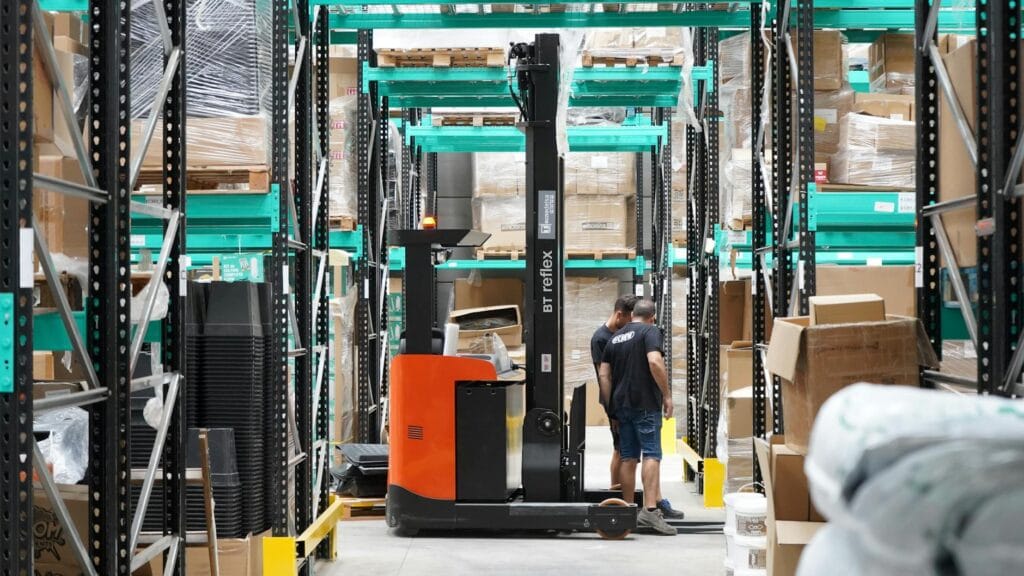
A practical guide to the fulfillment process in Mexico: what a 3PL handles, which costs to compare, and what to verify before moving your inventory.

Get a Quote
Fill the form below to receive a personalized consultancy by our expert team.
Fill the form below to receive a personalized consultancy by our expert team.
A practical guide to the fulfillment process in Mexico: what a 3PL handles, which costs to compare, and what to verify before moving your inventory.

We ensure reliable, accurate, and on-time fulfillment solutions designed to support your business growth
Fulfillment is the work that turns an online order into a delivered product: receiving inventory, storing it, picking the right items, packing them, handing the parcel to a carrier, and handling returns. For a business selling in Mexico, the decision is not simply whether to rent warehouse space. It is how to keep stock accurate and meet delivery promises at a cost the business can sustain.
This guide explains what to evaluate before outsourcing to a third-party logistics provider, or 3PL. A 3PL may handle several logistics activities; the services included depend on the agreement. Warehousing alone does not necessarily include order processing, customer support or customs work.
For the controls behind these stages, start with our ecommerce inventory management guide and the returns and reverse logistics workflow.
There is no universal order-volume threshold. A small catalogue of fragile products can require more handling than a much larger volume of simple, single-item orders. Compare options when packing consumes time needed elsewhere, inventory discrepancies recur, peak demand exceeds capacity, or your delivery coverage no longer matches customer demand.
In-house operations can suit businesses with spare space, trained staff and processes they can maintain. Outsourcing can add capacity and specialist support, but it also creates handoffs that need clear ownership. Keep responsibility for product information, stock purchasing and customer promises explicit.
Use the same sample of orders and the same service requirements for every quote. Include receiving, storage, first and additional items picked, packaging, labels, shipping, returns handling and any agreed special work. Ask which charges are fixed, usage-based or subject to minimums.
For an in-house comparison, include premises, labor, equipment, software and the time spent resolving errors. For outsourced fulfillment, include the cost of moving inventory and the effort needed to manage exceptions. Do not assume that either model is automatically cheaper.
Shipping needs its own review: compare destinations, parcel sizes, service levels and surcharges using our shipping and freight cost comparison guide. A low headline rate may not be the lowest final charge for your actual orders.
For Amazon orders, evaluate the platform’s fulfillment options separately from your general warehouse decision. Our FBA and merchant-fulfilled planning guide covers that distinction. If products cross the border, add a separate cross-border fulfillment and customs review; domestic fulfillment does not resolve import requirements.
Build a SKU master with identifiers, descriptions, dimensions, weights, handling instructions and any lot or expiry information your goods require. Reconcile the opening inventory count, agree how orders and stock updates will be exchanged, and test a small set of representative orders.
Include a cancellation, a multi-item order and a return in the test. Check both the physical result and the records: was the right quantity reserved, was tracking attached to the right order, and was returned stock kept unavailable until approved? Set a review date for the first operational period and assign an owner to each unresolved issue.
Skynera offers warehousing, order fulfillment and returns services in Mexico. Share your product types, SKU count, monthly order volume, average items per order, parcel dimensions and destination mix so the team can assess the relevant service scope. Use our fulfillment quote data checklist to prepare a comparable operational brief.
Explore Skynera’s fulfillment services and request a tailored quote. Confirm coverage, processing commitments, integrations and pricing for your operation before making a warehouse decision.